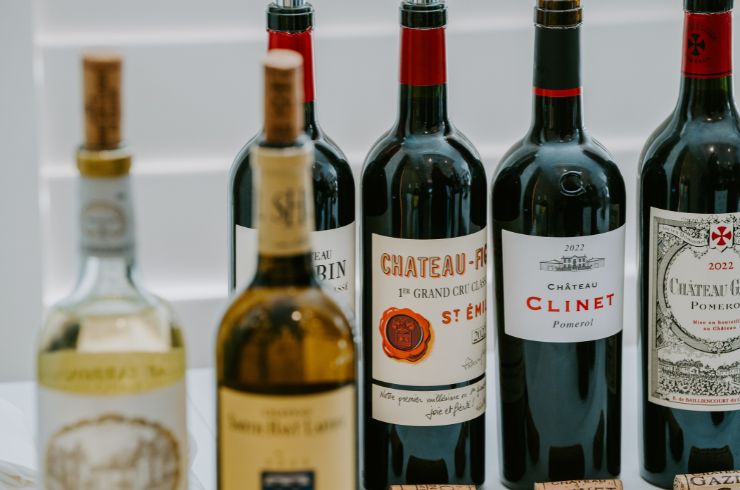
In my cellar, the glittering rows of shiraz are hard to ignore. The butter-yellow labels of Tyrrell's Old Patch and Johnno's Shiraz stand out against other Hunter Valley icons, including Mount Pleasant’s Maurice O’Shea and Brokenwood’s Graveyard Shiraz.
My collection is organised by region. Perusing a snapshot of each GI and the varieties produced within helps me to appreciate place. And it’s clear that from the Barossa Valley to Heathcote, Macedon to Great Southern, and McLaren Vale to Clare Valley, Grampians and Pyrenees, shiraz dominates.
Yet, our country's most widely planted grape variety, with its strong regional congruence, has been disrupted by the fear (and reality) of oversupply. It’s not breaking news – it’s a cyclical issue. But it’s never felt quite this challenging.
Despite an increase in crush volume in ’25 following the extreme lows of the ’23 and ’24 vintages, Wine Australia reports shiraz was 14 per cent below the 10-year average and 30 per cent down on the peak crush of ’21. This decline has been a considerable topic of discussion across both industry and consumer groups, which begs the question: Is our waxing and whining fuelling the tiresome, boring narrative about Aussie shiraz? Are we broadcasting ‘nobody wants this anymore’ rather than spotlighting emerging producers and championing classic expressions that reflect our most treasured vineyards and sites? It feels counterproductive to shout quite so loud.
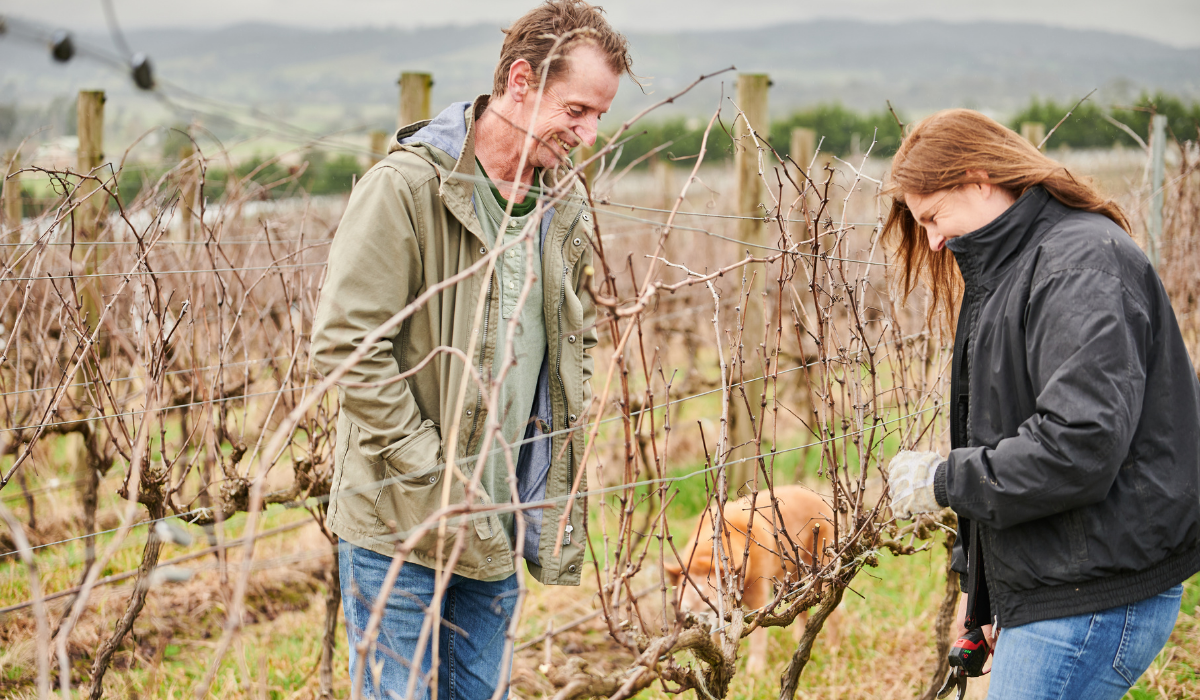
Still, there are undeniably things at play. Exports didn’t recover post-Covid, at least not in the way some assumed they would. Tom Carson, general manager of Heathcote Estate, Serrat in the Yarra Valley, and Yabby Lake on the Mornington Peninsula (he’s a busy man) elaborates: “Since 2020, there has been a massive oversupply as the Chinese market closed overnight. Couple that with consumption dropping worldwide, economic restraints on normal consumers, and a general shift in the market toward lighter, finer, more approachable wines.”
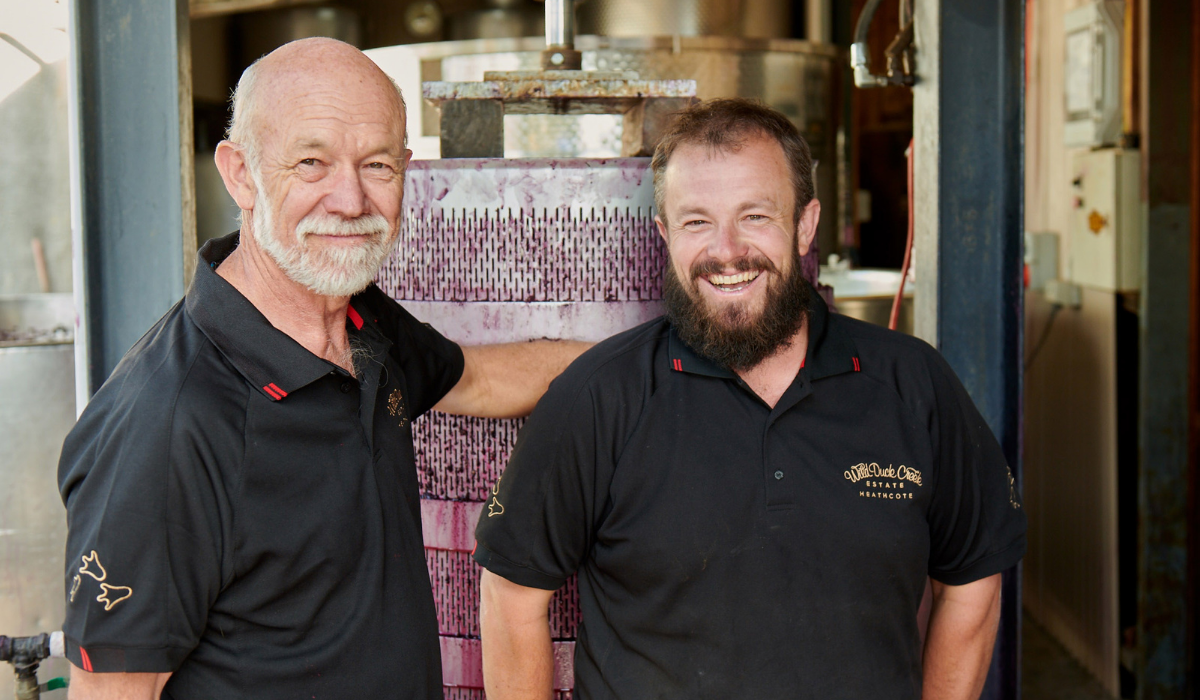
Second-generation winemaker Liam Anderson of Wild Duck Creek in Heathcote notes that pricing and the accessibility of other red grape varieties are also contributing factors. “I generally think that prices across our industry are too high. There are only so many consumers in this country, and if there are more varieties available, more choice, it’s only natural that the demand for the most popular grape historically might reduce.”
Though Liam doesn’t believe there to be a declining interest in the grape variety itself, he acknowledges the challenges of current market perception and the industry’s duty to educate: “Making wine, and especially shiraz, is always much easier than selling it. I believe the industry needs to invest in education about the virtues of wine consumption, in a broader sense, in the way it enhances one’s quality of life,” he says.
“Education around the benefits of consuming a bottle over two nights instead of one, about how clean wine is as a beverage when the winemaking additions are low. Encouraging producers to produce chemical-free wines through incentives. Legislate and educate consumers about restrictions for the use of certain additives, to build confidence in wine as a product, and enforce that legislation. In many ways, Australia is still the Wild West when it comes to what we are and aren’t allowed to do as producers. Perhaps it’s time to tighten the reins to help consumer confidence?”
Most of my shiraz purchases these days are made via annual allocations, from the evocative, fractured quartz-embellished bottles of Syrahmi’s Home Block to Callum Powell’s hot Barossa- based label Agricola. The biggest problem I encounter each May is how many bottles of Standish Lamella to buy. It’s a privileged take, for certain, but a mandate I take seriously, to cellar and share these wines widely.
The allocation email that burns the biggest hole in my inbox each year is Sami-Odi. All four wines in the range – Hoffmann Dallwitz, Little Wine, Our Hill and the brand new un-vintaged assemblage, Our Hill #1 – are made from shiraz. Winemaker and owner Fraser McKinley can’t keep up with demand. “Interest seems to only increase with each and every year,” he says, the Sami-Odi waitlist now exceeding 34,000. “To be perfectly honest, I’d be just fine if some of the interest waned and was spread around a little more.”
Frase is kind without fault, and, when pressed, speaks less to his successes and more to his intent: “I try to make the best wine I can in the hope that it sets a good example for our town, our region, our country and for those around the world working with syrah. I hope to be an inspiration to the new generation entering our industry and try to help them in whatever way I can.” But his humility doesn’t leave space for shiraz naysayers.
“People regularly tell me that shiraz or syrah is unpopular, or not on trend, or not cool. I don’t laugh at them, but there’s probably an uncontrollable little snigger. I just don’t see it that way,” he says. “Is Jean Gonon’s perfectly delicious Saint-Joseph uncool? Or Pax Mahle’s Sonoma Hillsides bottling? Or Wendouree Shiraz? How about Stefano Amerighi’s tremendously good Tuscan syrah? I’ll spare you a longer list, but for me, syrah is a cornerstone of the fine wine world, and there’s absolutely no reason that Australia and syrah or shiraz grown here shouldn't be a part of that.”
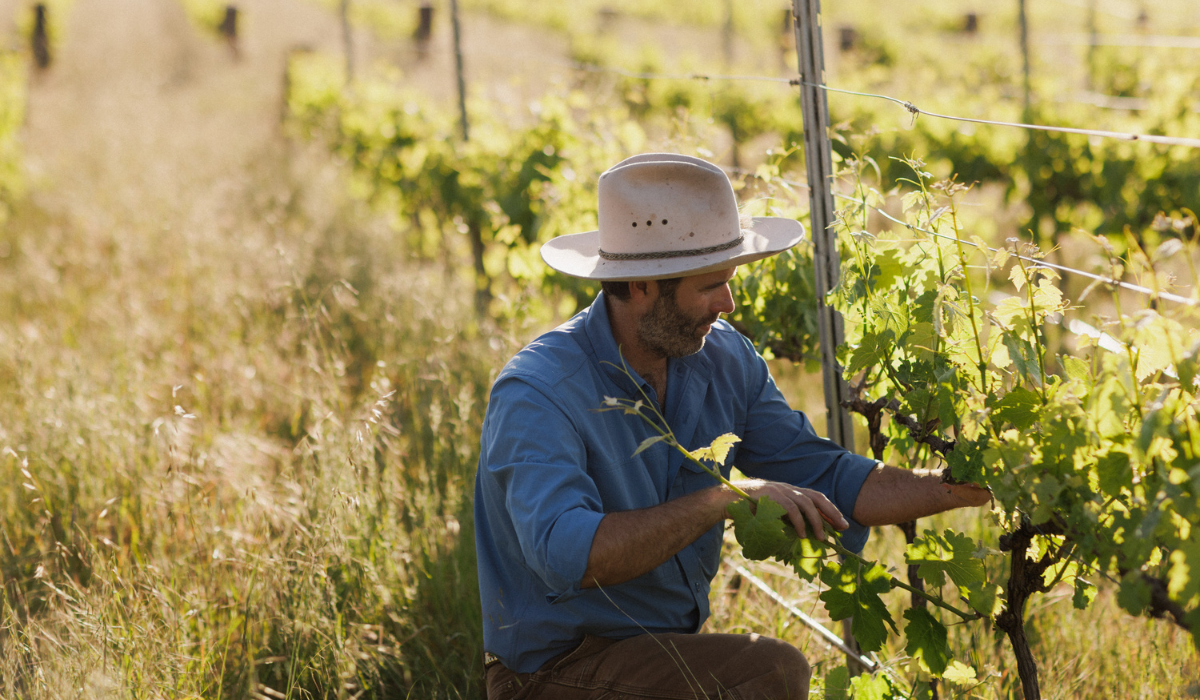
Diversity, too, is part of shiraz’s genetic make-up. Its ability to traverse the Australian landscape and climate has made it an appetising choice for growers. The best examples are not only regionally expressive but also demonstrative of the vineyard, at times dialling down to block and row.
"The diversifying of Australian shiraz over the last 50 years into cooler areas has created a whole new genre,” says Tom, a movement “pioneered by producers back in the ’80s experimenting with shiraz in cool climates, often co-fermenting with viognier, producing these more medium-bodied blue-fruited fragrant wines that were approachable on release and aged beautifully when done well.” Canberra’s Clonakilla comes to mind. The ethereal expressions, spearheaded by vigneron Tim Kirk, exude elegance, ease and resolve, with fine pepper spice a key giveaway of its cool-climate identity.
We are continuing to refine the parameters of shiraz’s capabilities, as its success in Tasmania demonstrates. Swansea winery OSSA took home a trophy at the 2025 Melbourne Royal Wine Awards for their 2024 Belbrook Syrah. It was their maiden release.
In my cellar, there is a wine that takes up a notable share of space. Mount Langi Ghiran Langi Shiraz is a wine I will not do without. “Delivers a rare elegance, no edges, everything already in place,” says Jeni Port about the current release, and no words are truer. It is always good. It is the wine I open as a precursor to a choir of “wows”.
.ashx)
Chief winemaker Adam Louder has been at Mount Langi Ghiran for most of his working life. “Shiraz is a shrinking variety in volume, but it is still the largest-selling red variety in Australia… we find that consumers are still really interested in shiraz,” he says.
“What is changing is overall consumption; people are drinking less across the board, and when that happens, every variety feels the impact. There’s always enthusiasm for alternative varieties, and that’s healthy, but over time, most wine lovers come back to the classics. They’re classics for a reason. Shiraz has proven its place over generations, and while people enjoy exploring, it’s rare that an obscure variety replaces those long-standing favourites for good.”
Adam hopes to see Australian expressions of shiraz gain international recognition once again, “not just for power or generosity, but for complexity, restraint and regional character. “Australia has some of the oldest vines and most distinctive shiraz sites in the world, and the best wines already stand comfortably alongside the great international examples,” he says. “The opportunity ahead lies in reinforcing that message, nationally and internationally, so Australian shiraz is understood for its depth, seriousness and longevity, rather than reduced to a single stereotype.”
There’s a consensus on steadfastness. Those who produce solid shiraz will continue to do so. The balance will come out in the wash. The rest lies with you and me, the eternal wine lover.
This article first appeared in issue #82 of Halliday magazine. To receive the magazine, unlock digital access to 190,000 tasting notes, and more, become a member now.