The tip of the spear for viticulture is, in some respects, a return to older ways, to stepping away from chemical intervention to reclaim natural soil health, to rewild non-vineyard land and to rebuild a holistic system where biodiversity and resilience self-regulate pests and disease. But equally, it is about embracing technology to respond nimbly and precisely, to tread softly, for quality, sustainability and environmental gains. In the mix, drones are becoming a powerful tool, from mapping vineyard health to delivering finely calibrated spray programs.
Drones have been used successfully for a few years for Normalized Difference Vegetation Index (NDVI) and Plant Cell Density (PCD) surveys, which assess the health of vineyards to direct precision agriculture programs. Drones employ thermal and multispectral sensors to determine stress in vegetation as well as soil moisture levels, with the data used to direct targeted applications of water, nutrients, compost and more.
“We've been playing around with NDVIs and PCD maps on drones for years, but there now are easier ways to get some of that data,” says Marty Smith of Absolute Viticulture, Tasmania’s largest viticulture consultancy, noting that satellites can provide constantly updated data in many, but not all, instances. “Where we've mainly used drones in the last couple of years is for fungicide spraying. It was pretty new technology, and I think we were the first to use it in Tasmania.”
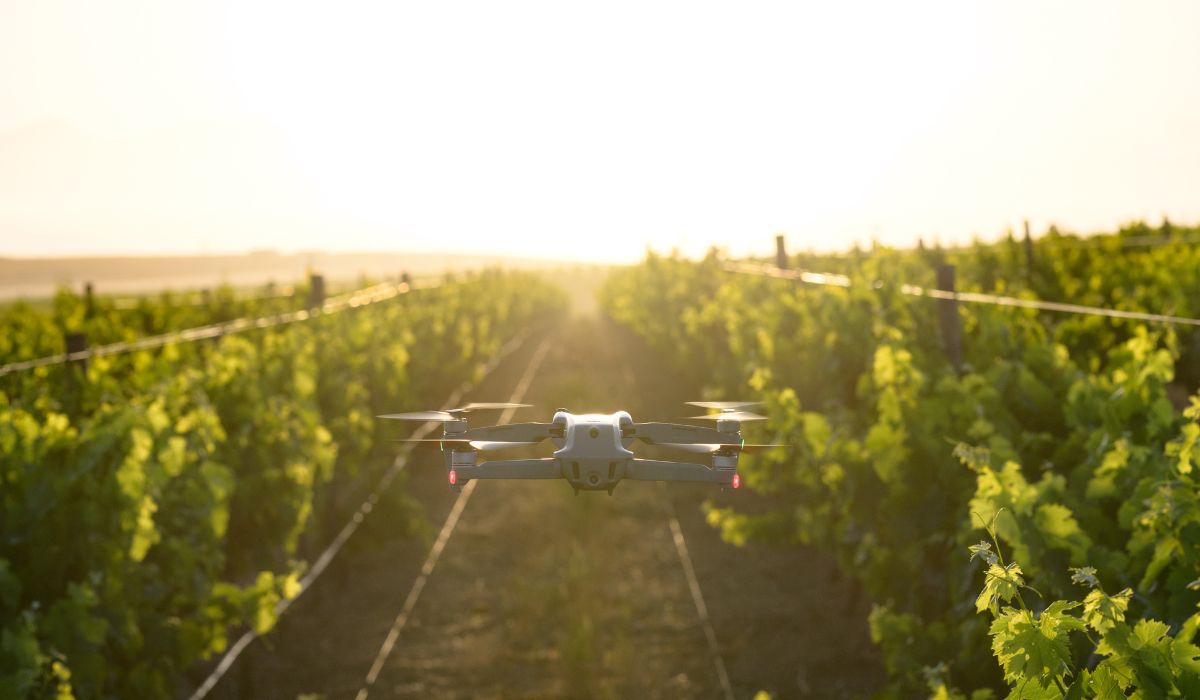
While drones and drone-deployed technology have advanced significantly, the application in Australian vineyards for spray programs is still in its nascent stages. And that’s partly due to a financial and technical barrier to entry for growers. “Getting a drone pilot license is only one step back from getting a commercial pilot license,” Marty says. “It's full-on. It’s definitely a contractor model.”
In late 2025, Ricky Connelly founded Velterra Drone in Victoria, combining his work in wholesale for DMG Fine Wine (Handpicked, Arras) with a part-time focus on vineyard spray programs. Velterra Drone quickly became his fulltime focus. “I think there was a bit of a gap in the Australian market for drone spraying, especially in the wine industry, which I've been very close to for about 15 years,” he says. “I went down a rabbit hole very quickly.”
That rabbit hole was inspired by drone spraying in the USA on corn and soybeans, with Ricky seeing the possibilities for specialised application in vineyards. “In Victoria, there are probably a dozen different operators,” he says, “but they’re mostly focused on weed control – things like gorse or serrated tussock in hard-to-reach areas. In terms of being focused on vineyards, I'm probably one of the first.”
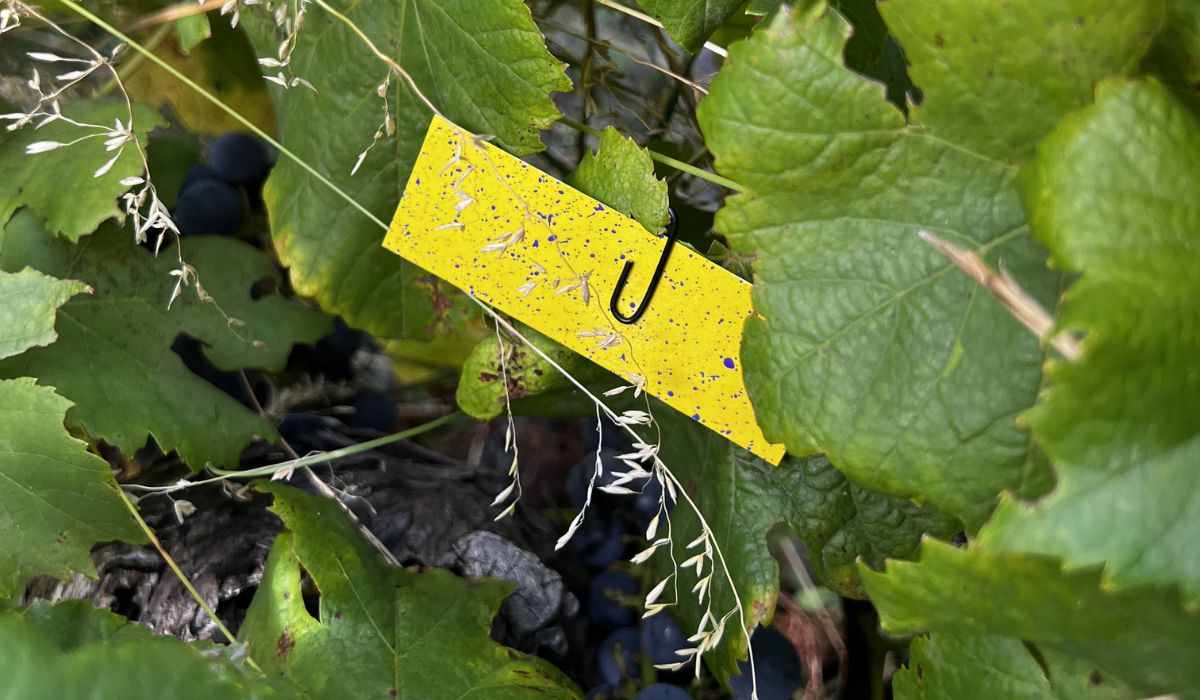
The wholesale experience made for a healthy network of connections, and Velterra’s early clients included Bindi, Mount Mary, Eastern Peake and William Downie, who all take sustainability and minimal environmental impact very seriously. “You're not driving heavy machinery up and down the rows,” Ricky says, “constantly pressing the dirt in and around the roots of the vines, so you've got healthier vines and healthier mid-rows. And no diesel use.”
Soil compaction is a major issue affecting soil health, water penetration and water-holding capacity, making limiting tractor passes a prime focus for growers. Additionally, sometimes mid-rows are inaccessible when access is most needed. Wet conditions often lead to increased disease pressure, but safety concerns and inevitable damage to the vineyard can represent too much of a risk with heavy machinery.
A significant rain event a couple of years ago that made vineyards inaccessible was what inspired Marty to approach a local contractor who was primarily working on spraying broadacre farms and for weed control. “It turned an impossible situation, where we couldn't get onto the vineyard, into a perfect situation, where we were able to spray the whole vineyard, and it only took about 15 minutes a hectare,” he says.
“Depending on the weather and on the spray windows you have,” Ricky adds, “if you have two or three days of rain come through, the vineyard probably needs a day or two to dry out before you can get in there safely and operate a tractor, and that probably extends the steeper the terrain gets. Whereas for the drone, you can control disease pressures much earlier and limit product use.”
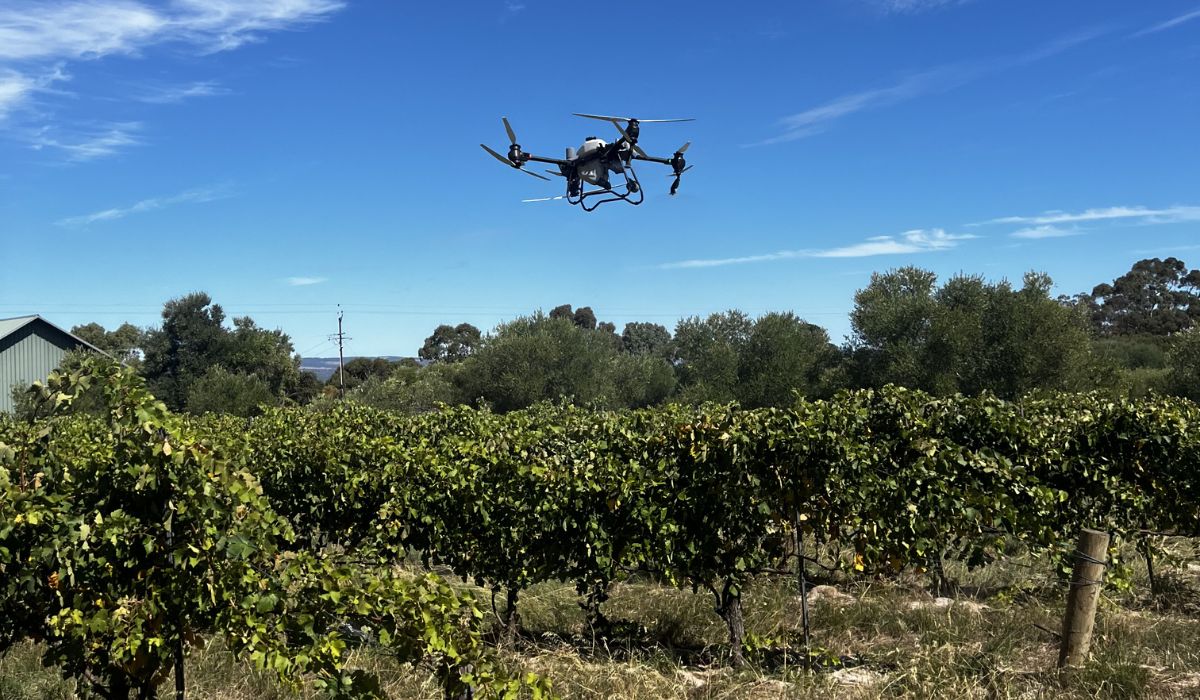
Even if the rows are accessible, Ricky notes that a drone is both more efficient and faster than traditional spraying. “With a couple of tests that I've done of around eight hectares for a single operator, it might take them a day and a half to two days to cover that whole area. Whereas I can turn up onsite and from getting everything off the trailer to packing up and loading, it's about three hours.”
The time saving is meaningful, but so is the responsiveness to nuance the spray program depending on the variation in the vineyard based on NDVI or PCD data, which can be loaded to create a custom spray program, or to manage weather conditions. “There are so many parameters that you can adjust on the fly,” Marty says, with no trace of irony. “The drone pilot will just pull it up, and, with just a touch on the iPad, change the droplet size.”
The droplet size can be adjusted from 50 microns up to 500, depending on the weather, adds Ricky. “And then you can adjust that spray rate on the controller, referring to a survey analysis. The amount of product tends to be the same as with tractors or ground rigs, but with less water. And in terms of efficiency and effectiveness, you get good coverage, including underneath the leaves.”
Barossa-based Michael Corbett of Vanguardist has just moved to a new bespoke winery, which he has taken totally off-grid for both power and water, while running extensive tests with drone spraying to further his sustainability objectives. He notes that the penetration in hard-to-reach areas in the canopy has been most encouraging, with the vectors produced from the downdraft generating thorough coverage. He also sees the time saving as an opportunity, including to experiment with the application of biodynamic preparations.
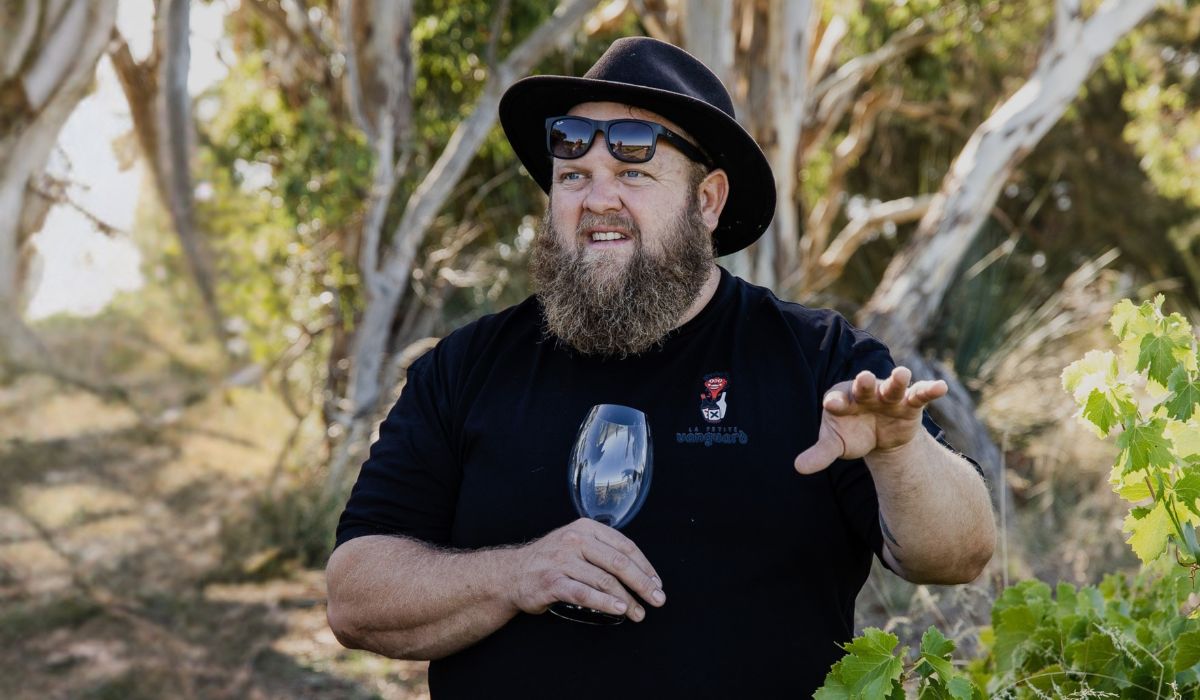
“It’s something that's not easy to achieve by either walking vineyard rows, using a paintbrush, using straw to put out the preps, which you're hoping to do at least twice a year for 500 and 501, back-to-back,” says Michael. “Now we have the ability to do that in 15 minutes a hectare, off the grid, using energy that we've created.”
That efficiency in what is a time and labour-intensive industry has other benefits, Michael adds. “It's going to open more opportunities for more passes with other products, other biodynamic products, we could put out more soil activator… We could just literally do more because we have more time to do it.”
The industry is still fledgling. Along with the licensing requirements, the cost of specialised drones is significant, creating barriers for prospective contractors and growers. However, the upside in terms of time efficiency, responsiveness and accessibility, reduction of diesel use, protection of soil integrity, and generally furthering sustainability objectives suggest that it is an initiative with a long-term future.
“It’s not a lot different to costing out a contractor with a spray unit and an operator,” concludes Marty. “The per-hour rate is much higher with the drone, but the speed that you cover the ground compensates for that.”
Subscribe to the Halliday Wine Companion Podcast
Hear from some of Australia's top winemakers and industry professionals as they share their stories and insights on the Halliday Wine Companion Podcast. Listen here, or on your usual podcast platform, and remember to rate, share and subscribe so you never miss an episode.

More from Marcus Ellis on sustainability
-
From the tasting team
Sustainable and beyond: Marcus Ellis on sustainability in the wine industry
8 Mar 2026 -
From the tasting team
Future Perfect: Marcus Ellis looks at what lies ahead for McLaren Vale
24 Sep 2025 -
From the tasting team
Water stress: Marcus Ellis speaks with three producers from drought-stricken regions
3 Jul 2025